Can I Add Battery Storage to My Existing Solar System?
Already have solar panels? You don't need to replace your entire system to add battery storage. Learn about retrofit battery installations and how they can transform your existing solar setup.
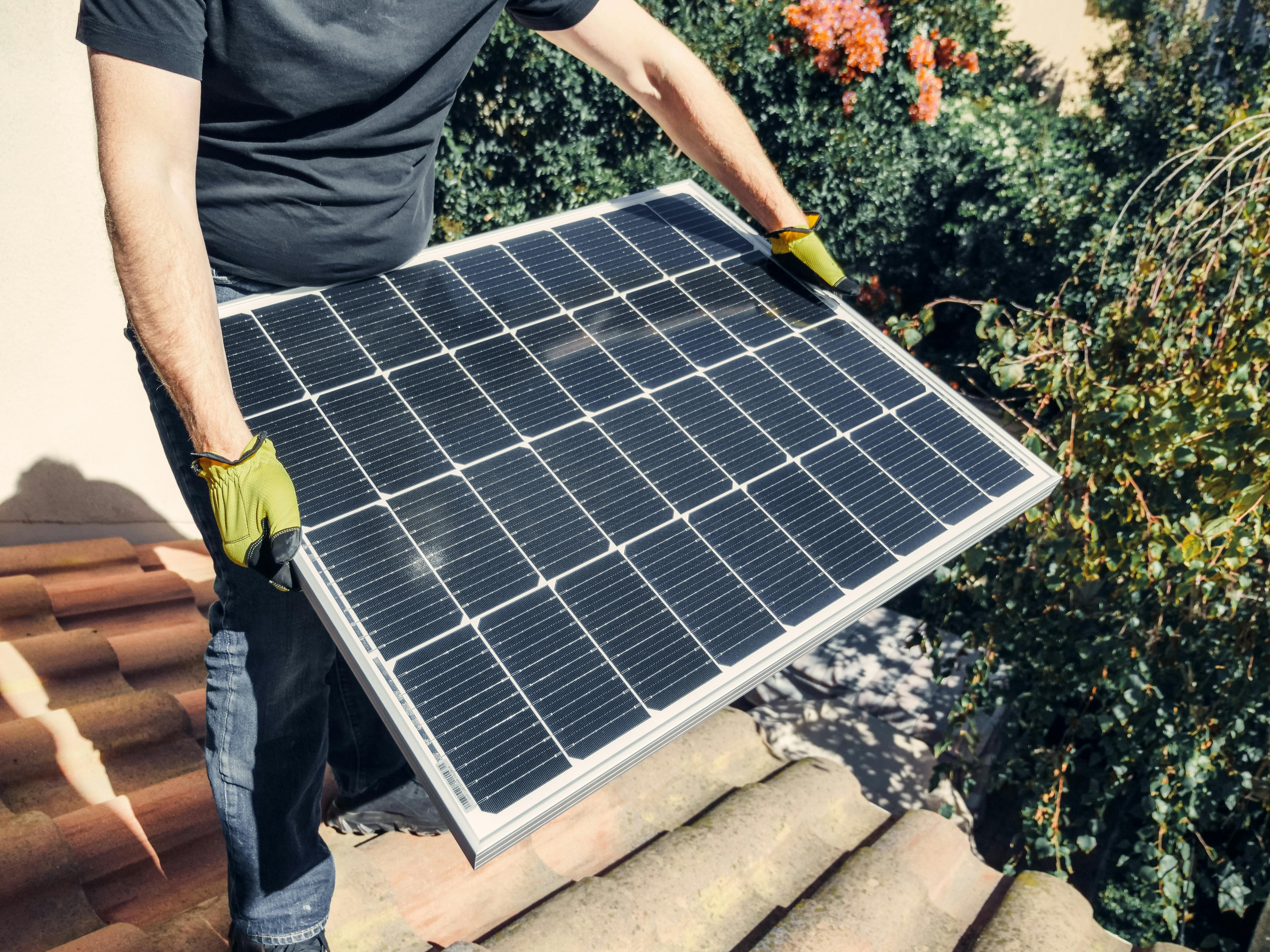
One of the most common questions we hear from Scottish solar panel owners is: "Can I add a battery to my existing system?" The answer is almost always yes - and it's often more straightforward than you might think.
Why Retrofit a Battery?
Many homeowners installed solar panels before battery technology became affordable. Now, with battery prices falling and smart tariffs creating new savings opportunities, adding storage makes financial sense:
- Increase self-consumption: Store excess daytime generation instead of exporting it for pennies
- Enable tariff arbitrage: Charge from cheap overnight grid electricity
- Maximise ROI: Get more value from your existing solar investment
- Future-proof: Prepare for potential export rate reductions
Compatibility: Will It Work With My System?
Most solar systems installed in the last 5 years are battery-compatible, but the approach depends on your existing setup:
AC-Coupled Systems (Easiest)
If you have an existing solar inverter, an AC-coupled battery system connects directly to your consumer unit. This is the simplest retrofit approach:
- Works with: Any existing solar system
- Popular options: GivEnergy All-in-One, Tesla Powerwall, Duracell Energy
- Installation time: 1 day typically
- Efficiency: 92-94% round-trip
DC-Coupled Systems (More Efficient)
If your inverter is battery-ready or nearing replacement, DC coupling offers better efficiency:
- Works with: Modern hybrid inverters or requires inverter replacement
- Popular options: Fox ESS H3, Sunsynk, Sigenergy
- Installation time: 1-2 days
- Efficiency: 95-97% round-trip
Checking Your Inverter
Look up your inverter model to determine compatibility:
- SolarEdge: Battery-ready with StorEdge interface
- Fronius: Compatible with external battery systems
- Growatt/Solis/SolaX: Many models have battery connections
- Older string inverters: AC-coupled battery required
The Retrofit Process
1. System Assessment (Week 1)
An MCS-certified installer will:
- Review your existing solar system specifications
- Check your electrical setup and consumer unit
- Analyse your energy usage patterns and export data
- Recommend appropriate battery size and type
2. Design & Permissions (Week 2-3)
- Battery system design
- DNO (Distribution Network Operator) notification or application - SP Energy Networks in central and southern Scotland, SSEN in the north
- Ordering equipment
3. Installation (Week 4)
Professional installation typically takes 1-2 days:
- Battery unit mounting (internal or external)
- Electrical connections to consumer unit
- Integration with existing solar system
- Commissioning and testing
- App setup and user training
4. Activation & Optimisation
Once connected:
- Switch to a suitable smart tariff (Octopus Go/Agile)
- Configure charge/discharge schedules
- Monitor performance through the app
- Fine-tune settings based on usage patterns
Sizing Your Retrofit Battery
Choose battery capacity based on your evening/night usage:
- 5-7 kWh: Covers typical evening usage (5pm-11pm) - suits 3-4kW solar systems
- 9.5-10 kWh: Covers evening plus morning usage - a common choice
- 13.5-15 kWh: Covers full overnight needs, ideal for EV charging
Review 6 months of export data to understand how much energy you're currently sending to the grid.
Cost & Payback
Typical retrofit battery installation costs:
- 5kWh system: varies by installation
- 10kWh system: varies by installation
- 15kWh system: varies by installation
Batteries, including those added to existing solar systems, currently have 0% VAT for homes until March 2027.
Expected Savings (Illustrative Example)
For a typical Scottish home with 4kW solar and a 10kWh battery:
- Self-consumption increase: 45% → 85% (+40% of 3,500kWh = 1,400kWh saved)
- Grid import reduction: 1,400kWh × 30p = approximate annual saving
- Arbitrage savings: additional value depends on your tariff
- Total annual saving: a survey is the best way to estimate
- Payback period: a survey is the best way to estimate
Your own figures will depend on your usage, tariff and system, so ask for a calculation based on your actual data.
Common Questions
Will I need planning permission?
Usually not. Internal batteries need no permission, and most external units are treated as permitted development. Listed buildings and homes in conservation areas may need consent, so check before installation.
Can I keep my current export tariff?
Yes, but review if it's still optimal. Many older SEG rates (5p/kWh) are now outperformed by self-consumption.
What about warranty?
Battery warranties (10-12 years) are independent of your existing solar warranty.
Will it work with my smart meter?
Yes, modern batteries work alongside all smart meter generations.
Getting Started
If you're considering retrofitting battery storage:
- Check your last 6 months of export data - this shows your retrofit potential
- Review your current tariff - are you on the best rate?
- Get an MCS-certified assessment - ensure compatibility and proper sizing
- Consider your usage patterns - battery size should match evening demand
Next Steps
Ready to explore battery retrofit options? Get in touch for a no-obligation survey. We install through MCS-certified partners. You can also read our guides to solar battery integration and battery storage explained.
Ready to Get Started?
Get a no-obligation consultation and find out how much you could save with solar and battery storage.
Get Your Quote