Solar & Battery Storage FAQ for Scotland
Honest, Scotland-specific answers to the 20 most common questions about solar panels and battery storage. Updated February 2026.
Do solar panels and batteries work in Scotland?
Yes — solar panels and batteries work well across Scotland, generating 3,200–4,100 kWh annually from a typical 4kW system. Combined solar and battery costs range varies with 0% VAT reducing the upfront cost and finance available, subject to status. A survey is the best way to estimate your payback period and savings.
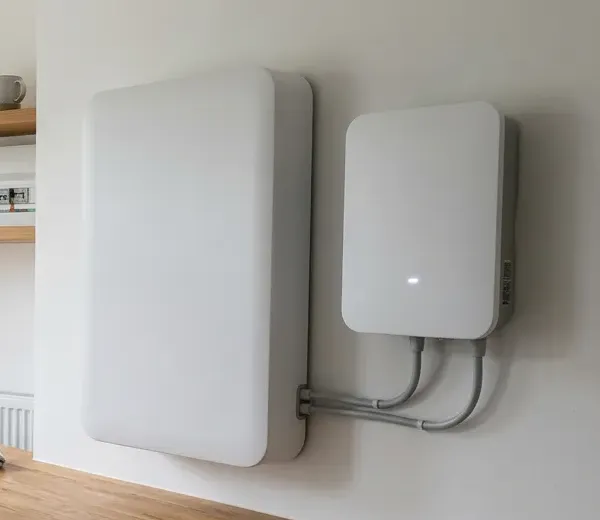
A home battery storage system in Scotland typically costs varies depending on capacity. A popular 5.2kWh Fox ESS battery costs vary installed, while larger 10kWh systems range varies. All domestic battery installations qualify for 0% VAT until March 2027, reducing costs by approximately 20%.
Full cost breakdown →Yes, solar batteries are financially worthwhile for most Scottish homeowners. A typical battery system pays for itself in 4-6 years through self-consumption of solar energy and smart tariff arbitrage. By charging at off-peak rates (7.5p/kWh on Octopus Go) and using stored power during peak hours (24-35p/kWh), Scottish homeowners save annually from the battery alone.
Battery storage explained →Solar panels generate electricity throughout Scottish winters, though at reduced output. A 4kW system produces around 5-10 kWh on a typical December day compared to 15-25 kWh in June. Panels work from daylight, not direct sunshine, so they generate even on overcast days. Battery storage is particularly valuable in winter, storing cheap overnight electricity for daytime use.
How solar works in Scotland →Fox ESS is currently the most installed battery brand in Scotland, chosen for its reliability, competitive pricing, and 10-year warranty. For larger homes, the Tesla Powerwall 2 (13.5kWh) offers premium performance. Duracell Energy and GivEnergy are strong alternatives. The best choice depends on your energy usage, solar system size, and whether you use a smart tariff.
Modern lithium-ion batteries like Fox ESS and Tesla Powerwall are warranted for 10 years and typically last 12-15 years before capacity drops below 80%. Most manufacturers guarantee 6,000+ charge cycles. In a Scottish home cycling once daily, that equates to over 16 years of use. Battery technology is improving rapidly, so replacements will be cheaper and more capable.
Yes, battery storage enables profitable tariff arbitrage in Scotland. Using Octopus Agile or Go tariffs, you charge your battery at 7.5p/kWh overnight and avoid importing at 24-35p/kWh during peak hours. Some homeowners earn additional income by exporting stored solar at peak prices through the Smart Export Guarantee. Typical annual savings from battery arbitrage alone are Varies.
Battery storage is particularly beneficial in rural Scotland where grid supply can be intermittent. A home battery provides backup power during outages, and solar panels reduce dependence on the grid entirely. In the Highlands and Islands, extended summer daylight (up to 19 hours) generates excellent solar output. Battery systems are fully weather-sealed and rated for Scottish conditions.
Highlands installations →There is no Scottish funding scheme for solar panels or batteries. The Scottish heat pump funding scheme offers available for eligible properties (for eligible eligible rural homes), subject to eligibility, but it does not cover solar or batteries. Solar panels and batteries for homes have 0% VAT until March 2027, and finance available, subject to status. You can also earn export payments for electricity you send to the grid.
Full funding guide →A typical Scottish home requires 10-14 solar panels (3.5-5kW system) depending on electricity usage, roof space, and orientation. A 4kW system (10 panels) generates 3,200-3,800 kWh annually, covering 80-95% of average household electricity. South-facing roofs at 30-40 degrees achieve optimal output, but east/west orientations still perform well at 85-90% efficiency.
Solar output calculator →Battery arbitrage means charging your battery when electricity is cheap and using that stored energy when prices are high. On Octopus Go, you charge at 7.5p/kWh between midnight and 5am, then use that power instead of importing at 24-35p/kWh during the day. This saves 16-27p per kWh of stored energy. A 5kWh battery doing this daily saves approximately Varies per year.
Arbitrage calculator →Most domestic solar panel installations in Scotland fall under permitted development and do not require planning permission. Exceptions include listed buildings, conservation areas, and installations that protrude more than 200mm from the roof surface. Ground-mounted arrays over 9 square metres need permission. Battery storage systems installed inside or against the house typically do not need permission.
A standard domestic solar panel installation in Scotland takes 1-2 days. A combined solar and battery system typically takes 2-3 days. The overall process from initial enquiry to completion usually takes 4-8 weeks, including survey, design, DNO notification, and installation scheduling. MCS certification and smart meter setup are completed within a week of installation.
A survey is the best way to estimate your payback period. With 0% VAT until March 2027, the effective payback period can be shorter. Finance available, subject to status.
ROI calculator →Yes, retrofitting a battery to existing solar panels is common. A battery can be added to any solar system with a compatible inverter, or a hybrid inverter can be installed alongside the battery. Retrofit installations typically take one day and qualify for the same 0% VAT (until March 2027) as new installations. Finance available, subject to status.
Solar battery integration →Standard grid-tied solar panels shut down during a power cut for safety reasons (to protect engineers working on the grid). However, battery storage systems with Emergency Power Supply (EPS) functionality can provide backup power during outages. Fox ESS and Tesla Powerwall both offer EPS as standard, automatically switching to battery backup within milliseconds of a grid failure.
Aberdeen receives over 1,400 hours of sunshine annually, the highest in Scotland. A 4kW solar system in Aberdeen typically generates 3,700-4,100 kWh per year. This is higher than Glasgow (3,400-3,800 kWh) due to Aberdeen's clearer skies and coastal location. Combined with battery storage, Aberdeen homeowners can see meaningful savings on electricity bills — a survey is the best way to estimate yours.
Aberdeen solar installations →Glasgow receives over 1,200 hours of sunshine annually, which is more than enough for solar panels to be financially viable. A 4kW system in Glasgow generates 3,400-3,800 kWh per year. With 0% VAT until March 2027, Glasgow homeowners can see a solid return on investment. Finance available, subject to status. A survey is the best way to estimate your savings.
Glasgow solar installations →Octopus Go and Octopus Agile are the most popular smart tariffs for battery owners in Scotland. Octopus Go offers a flat 7.5p/kWh rate for 4 hours overnight, ideal for predictable savings. Octopus Agile offers variable half-hourly pricing, sometimes going negative (you get paid to use electricity). Both tariffs maximise battery arbitrage savings — a survey is the best way to estimate your potential savings.
Fox ESS batteries (5.2kWh from Varies) offer excellent value for typical Scottish homes. Tesla Powerwall 2 (13.5kWh from Varies) suits larger homes with higher consumption. Fox ESS charges and discharges faster, making it better for tariff arbitrage. Tesla offers a sleek design and larger capacity in a single unit. Both have 10-year warranties and are well-proven in Scottish conditions.
Research indicates solar panels can add value to property in Scotland. Properties with solar and battery are increasingly attractive to buyers due to lower running costs and improved EPC ratings. An EPC improvement from D to C can add further value and is often required for green mortgage products.
Related Resources
Still Have Questions?
Our Scottish solar experts are here to help. Get a no-obligation consultation.
Related Solar & Battery Guides
Explore more expert resources for Scottish homeowners