Solar Panels & Battery Storage in Glasgow
We install through MCS-certified partners across all G postcodes. No-obligation survey. Finance available, subject to status.
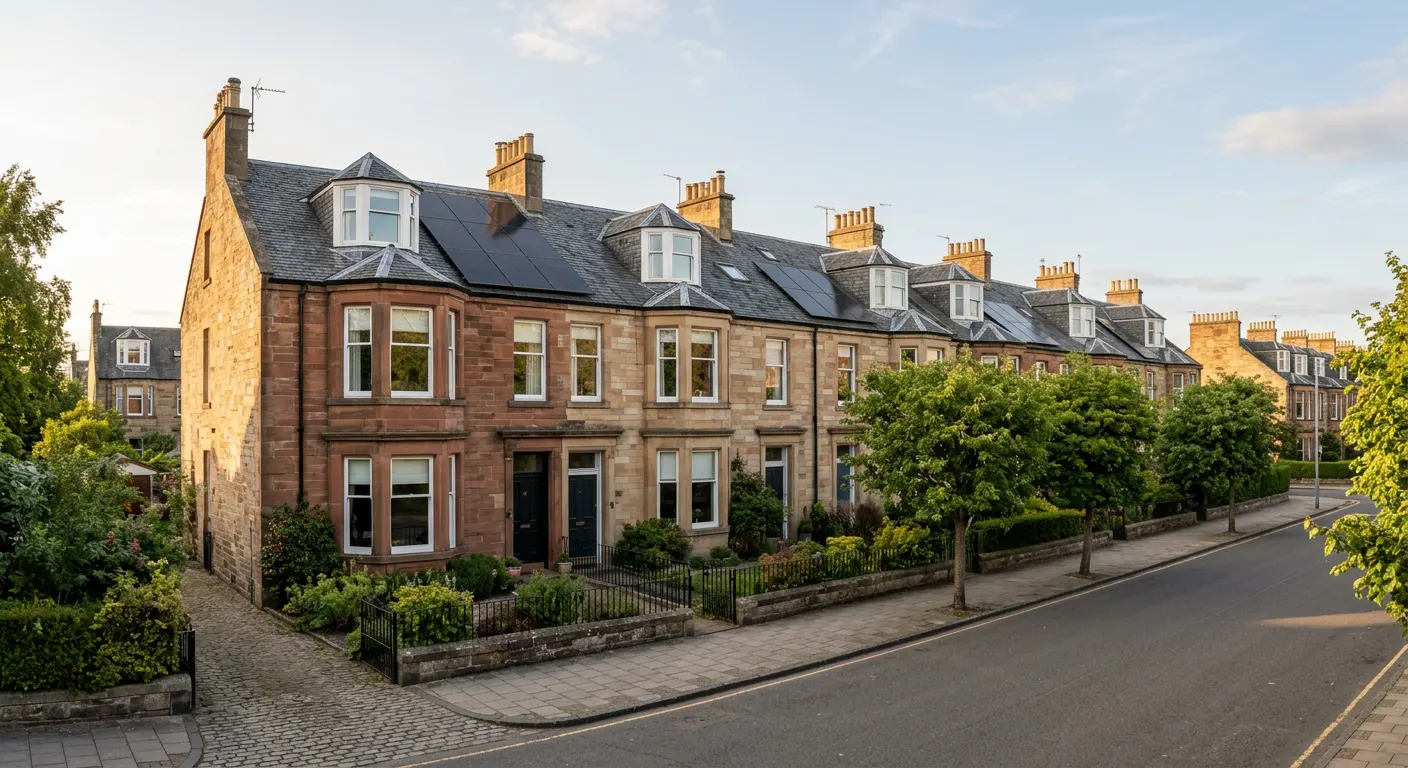
Glasgow homes range from sandstone tenements in the West End and Southside to 1930s semis in Knightswood, bungalows in Bearsden and Newton Mearns, and new-build estates on the edges of the city. Each of these needs a slightly different approach to solar panels and battery storage. This guide covers what matters for Glasgow homes: roof types, the west-coast weather, the local electricity network and the system set-ups that tend to work best.
1203 hrs
Annual sunshine hours in Glasgow
3,400-3,800 kWh
Typical annual generation (4kW system)
Varies
Illustrative annual savings (solar + battery). Your survey gives a figure for your home.
Solar Panels in Glasgow: Everything You Need to Know
Glasgow, Scotland's largest city, is perfectly suited for solar panels and battery storage. Despite its reputation for rain, Glasgow receives over 1,200 hours of sunshine annually - more than enough for excellent solar generation. We install through MCS-certified partners across every Glasgow area.
Glasgow homes and what they mean for solar
Many Glaswegians live in tenement flats with shared slate roofs. Panels can be fitted to a tenement roof, but every owner in the close usually needs to agree, and the factor often has to approve the work and the scaffolding. Where a roof is shared, a battery on its own can be a simpler option, as it sits inside your flat and charges on a cheaper overnight tariff.
Houses are more straightforward. Hipped roofs on 1930s semis and bungalows often have one good south, east or west face, and Victorian villas in Pollokshields, Dowanhill and Hyndland have large roofs but may sit in conservation areas, where Glasgow City Council should be checked before work starts. Newer homes in places like Robroyston and Newton have simple, unshaded roofs that are often well suited to a straightforward panel layout.
How Glasgow's weather affects generation
Glasgow is one of the wetter parts of Scotland, with frequent cloud blowing in from the Atlantic. Solar panels still produce power under cloud because they work from daylight, not direct sunshine, though output on grey days is lower than on bright ones. Regular rain also helps wash dust off the panels.
Generation follows the seasons: long, light evenings from May to August give the strongest months, while December and January produce far less. That pattern is why many Glasgow households pair panels with a battery, storing the daytime surplus in summer and charging from cheaper overnight electricity in winter.
The electricity network in Glasgow
Glasgow is covered by SP Energy Networks, the network operator for central and southern Scotland. Most home systems fall under the G98 process, where the installer notifies SP Energy Networks shortly after the system is switched on. Larger systems, or a solar and battery set-up that could export more, need a G99 application before installation. The network may approve it as it is, approve it with an export limit, or ask for changes. Your installer handles this paperwork for you.
System set-ups that suit Glasgow homes
- Semi-detached and terraced houses: often around 3-4kW of panels, paired with a 5-10kWh battery to cover the evening.
- Detached homes and villas with bigger roofs: 4-6kW of panels, with a larger battery if you have an electric car or heat pump.
- Tenement flats with a shared roof: a battery on its own, charged overnight, avoids the need for agreement on roof works.
- East or west-facing roofs: splitting panels across both faces spreads generation through the day.
- A home survey looks at shading from neighbouring buildings and trees, which is common in tighter streets.
Typical ranges only. Your survey recommends a size based on your roof and how you use electricity.
Why Choose Us in Glasgow?
Areas We Cover in Glasgow
We install solar panels and battery storage throughout Glasgow, including:
All G postcodes covered. Contact us for any Glasgow location.
Solar & Battery Installation in Glasgow
No-obligation survey and honest advice for Glasgow homeowners. We install through MCS-certified partners.
Get Your Glasgow QuoteSolar and Battery Questions in Glasgow
Answers to the questions Glasgow homeowners ask about solar panels and battery storage.
Often yes, but the roof is usually shared, so the other owners in the close need to agree and the factor will normally need to approve the work. Listed tenements and those in conservation areas may need consent from Glasgow City Council. If agreement is difficult, a battery inside your flat is a practical alternative.
No. Panels generate from daylight, so they keep working under cloud, just at a lower level than in bright sun. Glasgow sees more rain than the east coast, but the long summer days still give strong generation, and a battery helps you use more of what the panels produce.
SP Energy Networks runs the local electricity network across Glasgow and the rest of central and southern Scotland. Your installer will either notify them after installation for a smaller system or apply to them beforehand for a larger one. You do not need to contact them yourself.
Most rooftop solar on houses is permitted development, so planning permission is usually not needed. Listed buildings, conservation areas such as parts of the West End and Pollokshields, and flats can have extra requirements. Your installer will flag this at the survey, and it is worth checking with Glasgow City Council if in doubt.
Still have questions? We're here to help.
Ready to StartSaving Money?
Get a no-obligation assessment of your home's solar and battery potential. No pressure, no hard sell - just honest advice.
Related guides
- EdinburghSolar and batteries in Edinburgh: conservation areas, listed buildings, flats and bungalows, grid connection and typical system sizes explained.Read guide
- StirlingSolar and battery advice for Stirling homes: historic town centre, new-build estates, grid connection rules and typical system sizes.Read guide
- Solar Panel Cost ScotlandWhat solar panels and batteries cost in Scotland, how the 0% VAT exemption works, and what realistic payback periods look like for Scottish homes.Read guide
- Solar Funding ScotlandHow to fund solar and batteries in Scotland: 0% VAT until March 2027, export payments, and loans available, subject to status.Read guide
- Do Solar Panels Work in Scotland?How panels use daylight, and what Scottish weather means for output.Read guide