Solar Panels & Battery Storage in Edinburgh
We install through MCS-certified partners across all EH postcodes. No-obligation survey. Finance available, subject to status.
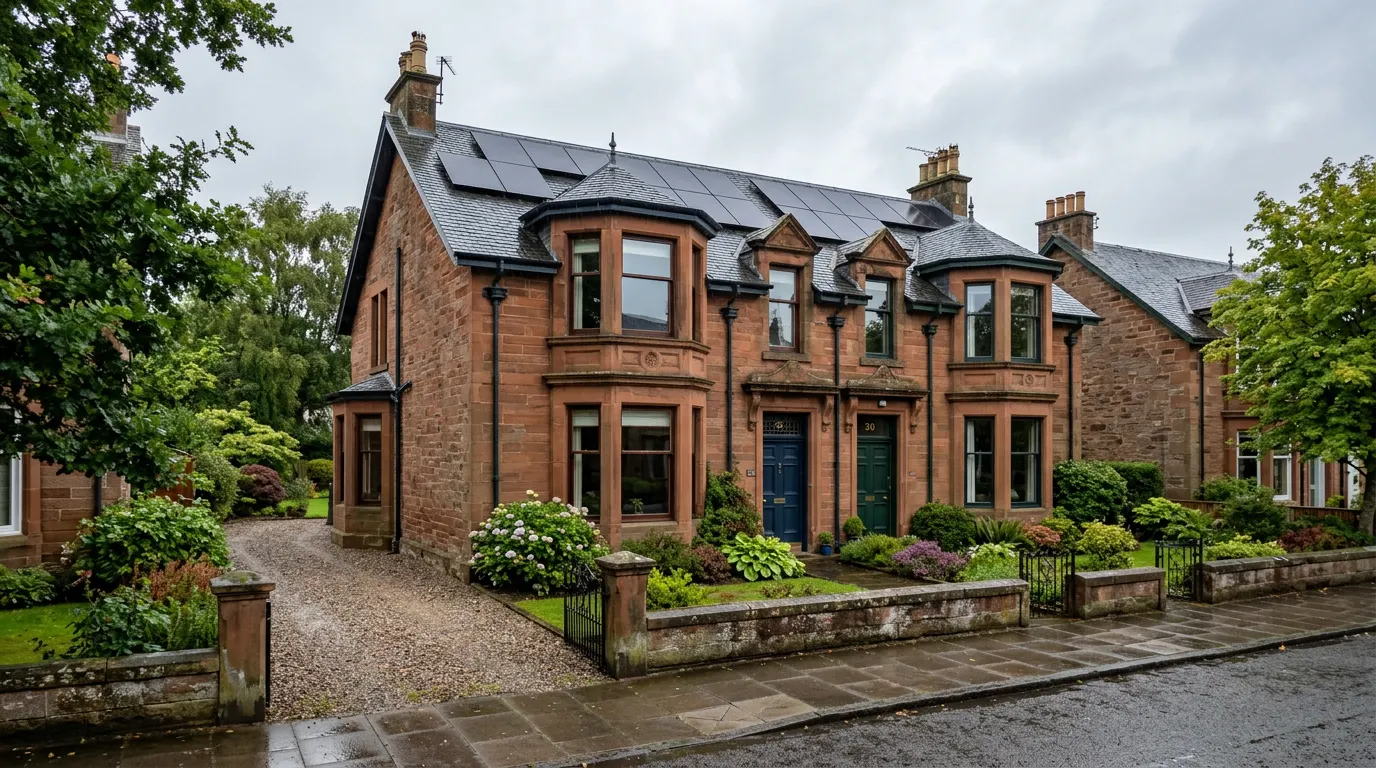
Edinburgh mixes Georgian terraces and medieval closes in its World Heritage centre, stone tenements in Marchmont, Bruntsfield and Leith, and bungalows and semis in suburbs like Corstorphine and Liberton. Its east-coast position makes it one of the drier, brighter parts of Scotland for solar panels. This guide explains what to consider for an Edinburgh home, from planning rules in the historic core to the network and the system sizes that tend to fit.
1393 hrs
Annual sunshine hours in Edinburgh
3,600-4,000 kWh
Typical annual generation (4kW system)
Varies
Illustrative annual savings (solar + battery). Your survey gives a figure for your home.
Solar Panels in Edinburgh: Everything You Need to Know
Edinburgh enjoys excellent solar potential with nearly 1,400 hours of sunshine per year. The city's mix of Georgian townhouses, Victorian tenements, and modern builds all suit solar installation. We cover all of Edinburgh, from the New Town to South Queensferry.
Edinburgh homes and planning considerations
The Old Town and New Town form a UNESCO World Heritage Site, and much of central Edinburgh sits within conservation areas with many listed buildings. Panels on a listed building need listed building consent, and conservation areas can have extra rules on visible roof slopes, so it is worth checking with the City of Edinburgh Council early. Rear roof slopes that cannot be seen from the street are often the easiest route.
Beyond the centre, things are simpler. Bungalows in Silverknowes and Corstorphine, 1930s semis in Craiglockhart and newer estates around Gilmerton and the Edinburgh fringes usually have straightforward roofs. Tenement flats in Marchmont, Gorgie and Leith share their roofs, so neighbours and the factor normally need to agree to any panel work.
Edinburgh's climate and solar output
Sitting on the east coast, Edinburgh is generally drier and sunnier than the west of Scotland, which helps solar generation. Cool sea air also suits panels, which work more efficiently when they are not hot.
The city can be very windy, so mounting and fixings are designed to cope with exposed roofs. Generation is strongest from late spring to late summer and modest in midwinter, when short days limit output. A battery helps balance this by storing summer surplus and making use of cheaper overnight electricity in the darker months.
The electricity network in Edinburgh
Edinburgh is in the SP Energy Networks area. Smaller home systems are usually covered by G98, which means the installer tells the network about the system after it is commissioned. Bigger systems, or combined solar and battery set-ups with higher export, go through G99, which needs approval before installation and can come with an export limit. Your installer submits the forms.
System set-ups that suit Edinburgh homes
- Suburban bungalows and semis: commonly 3-5kW of panels with a 5-10kWh battery.
- Larger detached homes in areas like Barnton or Colinton: 5-6kW of panels, with more storage for an electric car or heat pump.
- Listed buildings or front-facing slopes in conservation areas: a battery on its own or panels on a hidden rear slope may be the practical choice.
- Tenement flats: a battery charged on a cheaper overnight tariff, unless the whole stair agrees to roof panels.
- Exposed, windy sites: a survey confirms the roof structure and fixings before anything is designed.
Typical ranges only. Your survey recommends a size based on your roof and how you use electricity.
Why Choose Us in Edinburgh?
Areas We Cover in Edinburgh
We install solar panels and battery storage throughout Edinburgh, including:
All EH postcodes covered. Contact us for any Edinburgh location.
Solar & Battery Installation in Edinburgh
No-obligation survey and honest advice for Edinburgh homeowners. We install through MCS-certified partners.
Get Your Edinburgh QuoteSolar and Battery Questions in Edinburgh
Answers to the questions Edinburgh homeowners ask about solar panels and battery storage.
It is possible in some cases, but much of the area is listed or in a conservation area within the World Heritage Site, so consent is often needed and visible front slopes are usually harder to approve. Check with the City of Edinburgh Council before committing. Rear slopes or a battery on its own are common alternatives.
Yes. As an east-coast city, Edinburgh tends to be drier and brighter than the west of Scotland, and cool temperatures help panel efficiency. The long summer days give the strongest generation, and winter output is lower but still useful, especially alongside a battery.
SP Energy Networks covers Edinburgh and the Lothians. Your installer either notifies them after installation for smaller systems under G98, or applies before installation for larger ones under G99. You will not need to deal with the network yourself.
Usually, yes. A home battery can be fitted inside a flat, often in a cupboard or hallway, subject to space, ventilation and the manufacturer's safety guidance. It charges on cheaper overnight electricity and powers your home at busier times, without any changes to the shared roof.
Still have questions? We're here to help.
Ready to StartSaving Money?
Get a no-obligation assessment of your home's solar and battery potential. No pressure, no hard sell - just honest advice.
Related guides
- GlasgowSolar and battery advice for Glasgow homes, from tenements and factor consent to semi-detached roofs, grid connection and typical system sizes.Read guide
- StirlingSolar and battery advice for Stirling homes: historic town centre, new-build estates, grid connection rules and typical system sizes.Read guide
- Solar Panel Cost ScotlandWhat solar panels and batteries cost in Scotland, how the 0% VAT exemption works, and what realistic payback periods look like for Scottish homes.Read guide
- Solar Funding ScotlandHow to fund solar and batteries in Scotland: 0% VAT until March 2027, export payments, and loans available, subject to status.Read guide
- Do Solar Panels Work in Scotland?How panels use daylight, and what Scottish weather means for output.Read guide