Solar Panels & Battery Storage in Highlands & Islands
We install through MCS-certified partners across all IV/KW/PA/HS/ZE postcodes. No-obligation survey. Finance available, subject to status.
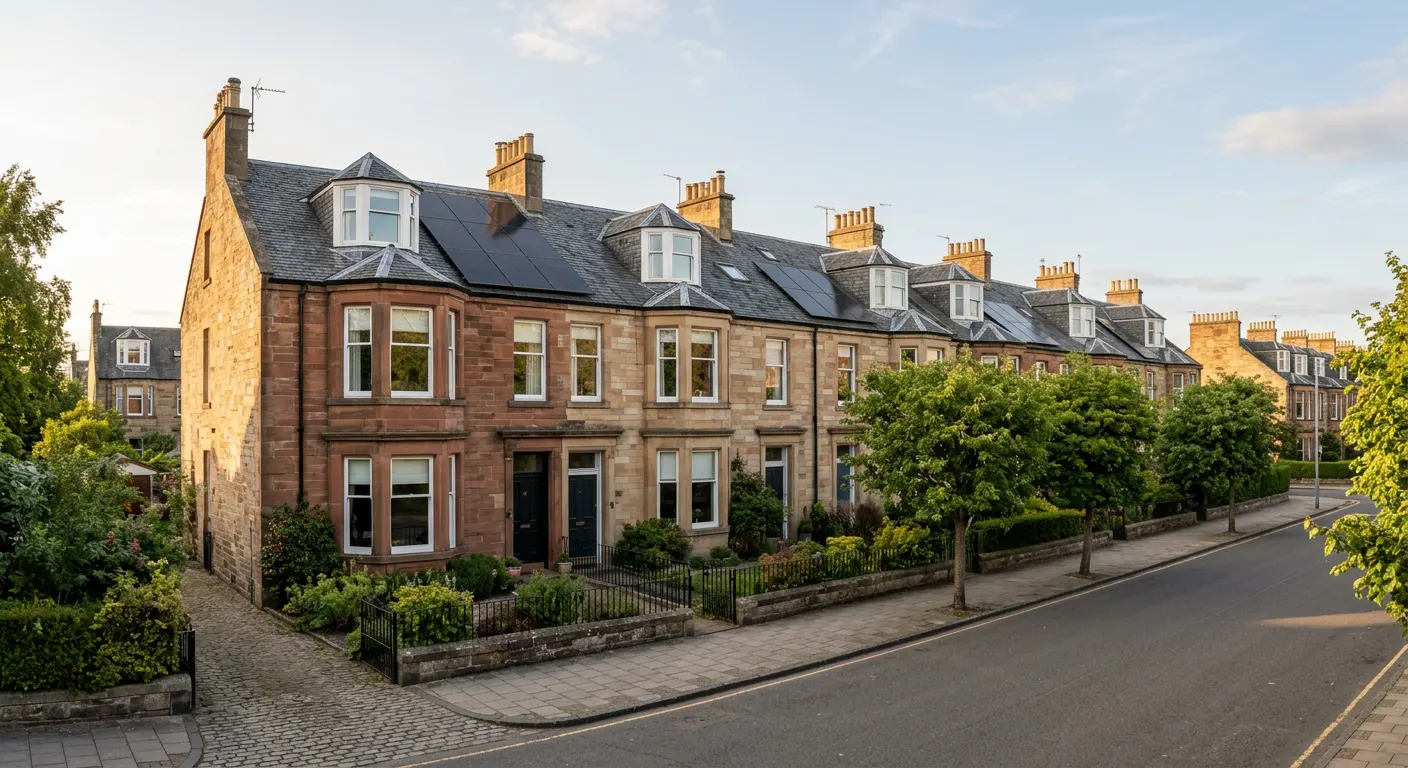
Homes across the Highlands and Islands, from Fort William and Oban to Skye, Orkney, Shetland and the Western Isles, face conditions you won't find in the cities: exposed coasts, long distances, and many properties off the gas network. Solar panels and battery storage can be particularly useful here. This guide explains what to consider for rural, island and remote Highland homes.
1180 hrs
Annual sunshine hours in Highlands & Islands
3,000-3,500 kWh
Typical annual generation (4kW system)
Varies
Illustrative annual savings (solar + battery). Your survey gives a figure for your home.
Solar Panels in Highlands & Islands: Everything You Need to Know
The Scottish Highlands and Islands present unique opportunities for solar and battery storage. Extended summer daylight hours (up to 19 hours in June) compensate for shorter winters, while battery storage can be particularly useful in areas where the grid is more exposed to weather. We serve Highland, Island and remote postcodes.
Highland and island homes
Bungalows, crofts, stone cottages and timber-frame kit homes are common across the Highlands and Islands. Many have simple, unshaded roofs with good space for panels, and outbuildings or ground-mounted arrays can work where the house roof isn't suitable. Older stone cottages may need roof checks before fitting, and some are listed or in conservation areas.
Many homes are off the gas network and heat with oil, LPG, solid fuel or electric storage heaters. That means electricity you generate and store yourself can go further, especially alongside a heat pump. Long distances mean surveys and installations are usually grouped by area.
Wind, salt and long summer days
The far north has extremely long summer days, giving strong generation from late spring into late summer, while winter days are very short. The west coast and islands are wetter and cloudier than the east, but panels still produce in diffuse daylight.
Exposure is the bigger factor. High winds and salt spray on coastal and island sites mean fixings, mounting rails and components must suit harsh conditions. Snow can sit on panels in upland areas for a short time. A battery helps cover evenings and, with a suitable set-up, can provide backup during power cuts.
The network across the Highlands and Islands
The Highlands and Islands are covered by SSEN (Scottish and Southern Electricity Networks). Smaller systems are notified under G98 after installation. Larger systems need G99 approval first. Some island and remote networks have limited capacity, so the network may approve a system with an export limit. A battery then lets you store and use more of your own generation instead of exporting it.
System set-ups that suit Highland homes
- Bungalows and crofts: often 4-6kW of panels where roof or ground space allows, with a 5-15kWh battery.
- Homes with frequent power cuts: a battery with backup power (EPS) for essential circuits.
- Off-gas homes: solar and storage alongside a heat pump or existing electric heating.
- Exposed coastal sites: corrosion-resistant fixings and mounting suited to high winds.
- Island homes with an export limit: a larger battery to keep more generation on site.
Typical ranges only. Your survey recommends a size based on your roof and how you use electricity.
Why Choose Us in Highlands & Islands?
Areas We Cover in Highlands & Islands
We install solar panels and battery storage throughout Highlands & Islands, including:
All IV/KW/PA/HS/ZE postcodes covered. Contact us for any Highlands & Islands location.
Solar & Battery Installation in Highlands & Islands
No-obligation survey and honest advice for Highlands & Islands homeowners. We install through MCS-certified partners.
Get Your Highlands & Islands QuoteSolar and Battery Questions in Highlands & Islands
Answers to the questions Highlands & Islands homeowners ask about solar panels and battery storage.
Only if the battery and inverter have a backup function, often called EPS, and the system is wired for it. Standard systems switch off during a power cut for safety. If power cuts are common where you live, mention it at the survey so the right equipment is specified.
Yes, we cover the Highlands and Islands, including island communities. Because of travel and ferry logistics, surveys and installations are scheduled by area, so it helps to get in touch early. Get in touch with your postcode and we'll explain what's possible.
The Scottish heat pump funding scheme offers available for eligible properties (for eligible eligible rural homes), subject to eligibility. It covers heat pumps, not solar panels or batteries. The Boiler Upgrade Scheme is for England and Wales only and does not apply in Scotland.
Panels and mounting systems are designed for wind loads, and in exposed Highland and island locations the installer chooses fixings and rails suited to the site. The survey checks the roof structure and exposure. Coastal sites also need corrosion-resistant components because of salt spray.
Still have questions? We're here to help.
Ready to StartSaving Money?
Get a no-obligation assessment of your home's solar and battery potential. No pressure, no hard sell - just honest advice.
Related guides
- InvernessSolar panels and batteries in Inverness: newer estates, rural properties, Highland weather, SSEN connection and typical system sizes.Read guide
- PerthSolar panels and home batteries in Perth and Perthshire: rural homes, conservation areas, SSEN grid connection and typical system sizes.Read guide
- Solar Panel Cost ScotlandWhat solar panels and batteries cost in Scotland, how the 0% VAT exemption works, and what realistic payback periods look like for Scottish homes.Read guide
- Solar Funding ScotlandHow to fund solar and batteries in Scotland: 0% VAT until March 2027, export payments, and loans available, subject to status.Read guide
- Do Solar Panels Work in Scotland?How panels use daylight, and what Scottish weather means for output.Read guide